





For a quality or compliance manager, traceability is the difference between a supplier you can put on the approved-vendor list and one you can't. Here is what it means in precision machining, and how it is evidenced.
What is traceability in precision machining?
Traceability is the ability to reconstruct a part's complete manufacturing history. It has two halves:
- Material traceability — the part is linked to the certified batch of raw material it was cut from, with its grade, source and mill certificate.
- Process traceability — the machines, operations and inspection steps used to make it are recorded.
Together they mean that, for any finished component, you can prove what it is made of and how it was made.
Why do aerospace and defence buyers require it?
Because the parts are safety-critical and the supply chain is audited. Traceability lets a buyer:
- Identify every affected part if a material or process issue is found.
- Prove conformance to regulators and primes.
- Pass supplier audits and stay on the approved-vendor list.
Energy and medical buyers require it for the same reasons — pressure-critical and patient-critical parts leave no room for doubt about material or process.
How does Milltech provide traceability?
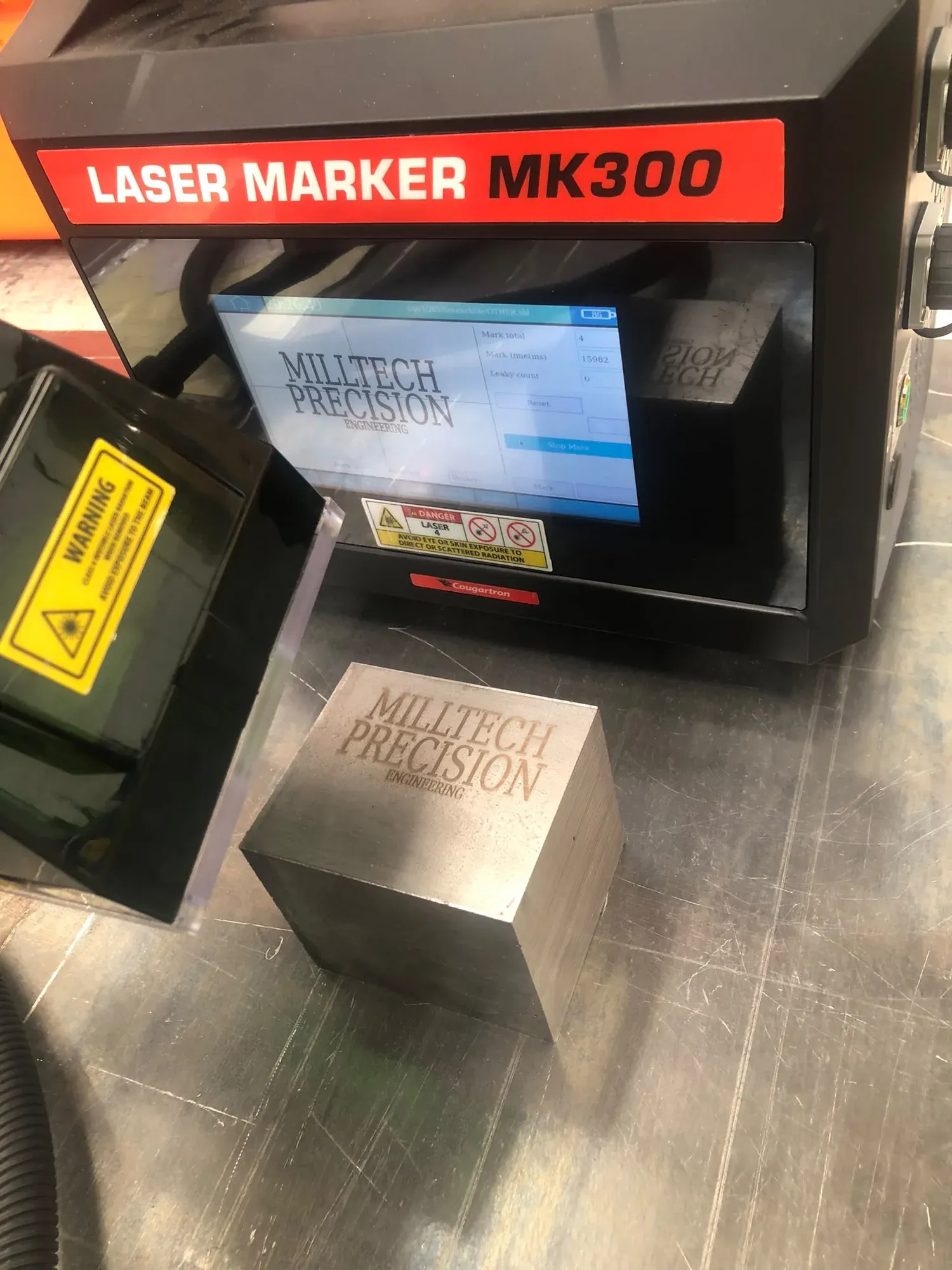
It starts at the bar. Incoming material is laser-etched with its trace code and colour-coded by grade, so the right stock is picked every time and the link from mill certificate to finished part is never broken. From there, every job runs through Milltech's Tricorn® ERP system, which tracks each component live from raw bar through every machining operation to dispatch — with barcode shop-floor data collection giving up-to-the-minute status. CMM inspection records verify each batch against drawing, and material certificates and controlled documentation are available where required.
What documentation can you get?
Depending on the programme, Milltech can supply material certificates linking parts to their certified batch, CMM inspection reports, and controlled manufacturing documentation — the evidence pack aerospace and defence approvals depend on. Tell us what your quality system requires and we will confirm what we can provide.