





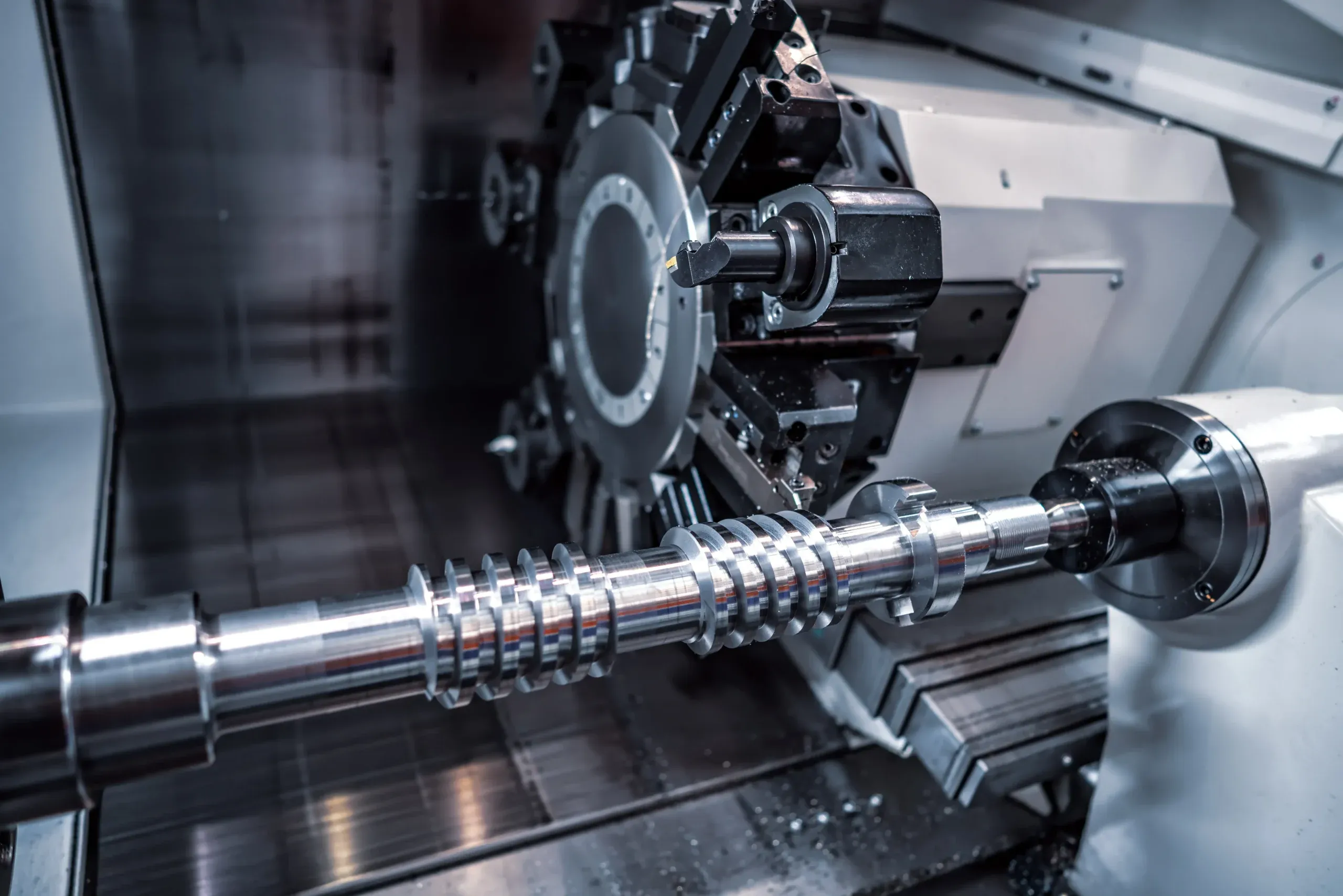
"What tolerance can you hold?" is the first question an engineer asks a machinist. Here is what 5-axis CNC machining achieves, why axis count matters for accuracy, and how tolerances are proven.
What tolerance can 5-axis CNC machining hold?
In practice, 5-axis milling holds tolerances of a few hundredths of a millimetre comfortably, and tighter where the application demands it. Milltech works to tolerances as tight as ±0.005 mm (±0.0002"), verified by CMM inspection. The achievable tolerance always depends on the material, geometry and feature — but a capable 5-axis shop should hold single-digit-hundredths of a millimetre repeatably.
How does 5-axis improve accuracy?
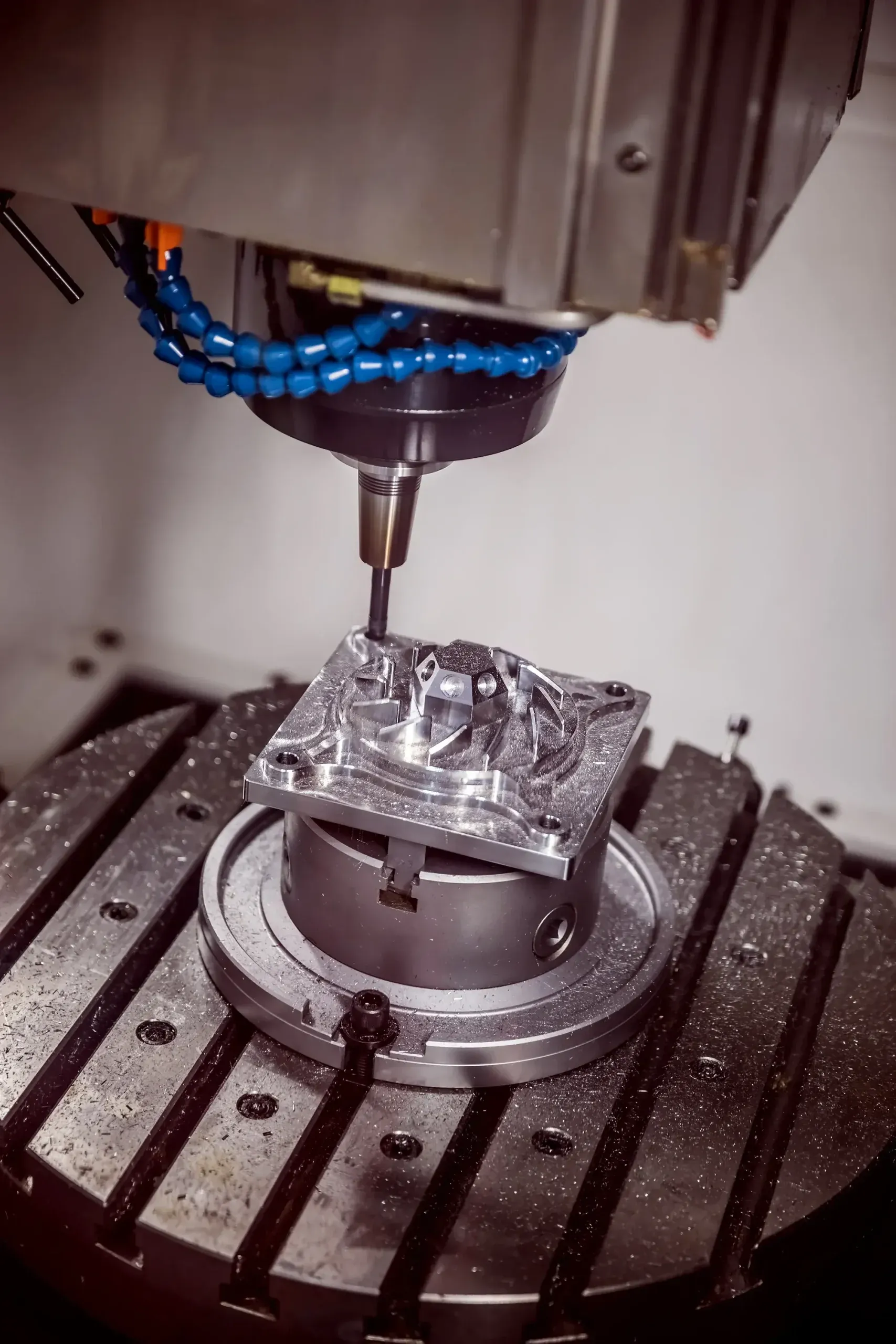
Accuracy is lost every time a part is unclamped and re-fixtured. 5-axis machining reaches almost every face of a component in a single setup, so:
- Fewer setups mean fewer opportunities for error to creep in.
- Complex geometry and undercuts are cut without re-fixturing.
- Surface finish improves because the tool can be presented at the ideal angle.
That single-setup capability is why 5-axis is chosen for complex, high-value parts.
What is the difference between 3, 4 and 5-axis machining?
- 3-axis — the tool moves in X, Y and Z. Ideal for prismatic parts and pockets.
- 4-axis — adds rotation about one axis, so the part can be machined on multiple faces.
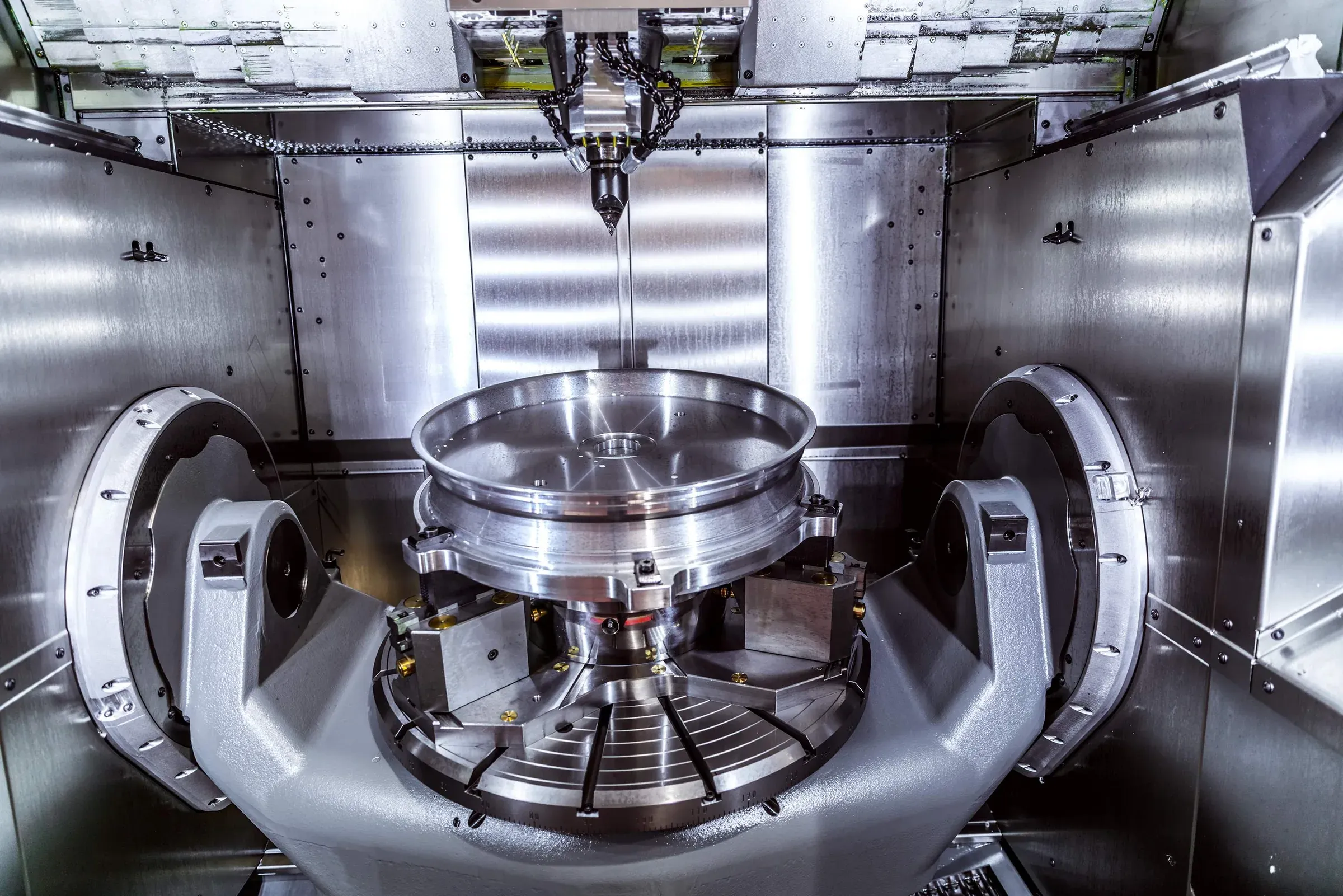
- 5-axis — adds a second rotary axis, letting the tool reach almost any face and undercut in one setup.
Milltech runs 3, 4 and continuous 5-axis machines, including Matsuura 5-axis and multi-pallet horizontals among a fleet of 40+.
How are tolerances verified?
A stated tolerance means nothing without verification. Milltech inspects components on coordinate measuring machines (CMMs) in a dedicated test and inspection facility, probing the finished part in 3D and comparing it against the drawing — the objective evidence behind every conformance claim.